SS Thistlegorm Trip Logistics: The Fast Decision
For most divers planning an SS Thistlegorm diving trip, the route decision comes down to energy, repeat-dive value, boat time, and how much uncertainty the itinerary can absorb. A day trip can work when the diver accepts long boat time and a tighter schedule. A liveaboard can work when repeat dives, rest, and itinerary flexibility matter more than sleeping on land.
- Read the full wreck context in Dive The SS Thistlegorm before deciding whether one or two dives are enough.
- Use operator booking questions to confirm mooring plans, guide ratio, expected current, entry timing, backup sites, and whether the trip still runs in marginal weather.
- For liveaboard fit, compare sleep, motion, cabin, and recovery assumptions with the PADI liveaboard diving plan before paying a deposit.
This page is for the practical decision that comes before the wreck briefing: how to reach the Thistlegorm without turning the dive into a fatigue project. The best option is not always the most famous route or the cheapest advertised trip. It is the format that leaves enough time, rest, and fallback margin for the divers actually going.
The short version: choose a Sharm day trip when you want the most direct land-based attempt and accept a long boat day; treat Hurghada as a logistics-heavy route unless the operator explains the plan clearly; choose a northern Red Sea liveaboard when repeat dives, calmer pacing, and a broader wreck-and-reef itinerary matter more than sleeping on land. Then verify the actual schedule with the operator, because weather, moorings, current, and crowding can change the day.
Watch The Wreck Before Choosing The Route
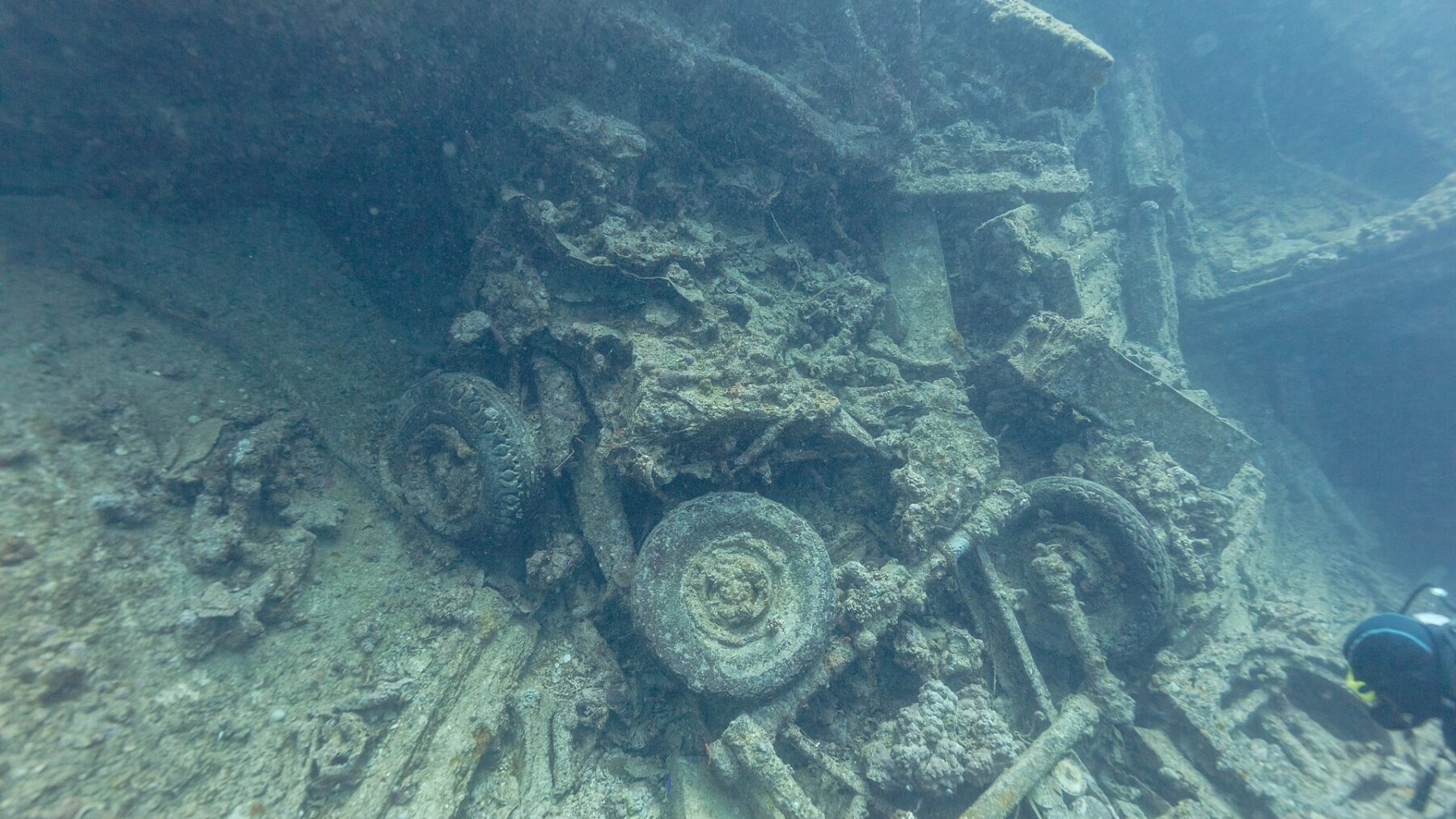
A short SS Thistlegorm wreck dive video can make the route choice less abstract. Notice the scale of the wreck, the need for calm spacing, and how quickly a famous site can still feel like a real dive rather than a sightseeing stop. If the video makes you want more than one careful look, a northern Red Sea liveaboard may be worth comparing more seriously.
Quick Route Answer
Choose Sharm el-Sheikh when you want the most direct land-based attempt and the operator can explain the early start, boat time, two-dive plan, current expectations, and backup site. Choose Hurghada access only when the exact pickup, transfer, crossing, return time, and cancellation policy are clear enough that the day still sounds reasonable. Choose a northern Red Sea liveaboard when the Thistlegorm is part of a wreck-focused week and you value repeat dives, warm-up sites, and a boat rhythm built around diving.
The deciding question is simple: after the travel time, surface interval, current, crowding, sun, and early start, will you still be a calm diver on the second descent? If the answer is uncertain, book the format with more margin or choose a different day.
The Choice Is Access, Energy, And Repetition
The SS Thistlegorm is famous enough that the name can overpower the practical decision. PADI lists the wreck as a boat-entry wreck dive with a maximum depth of 32 meters and cargo that draws divers from across the Red Sea. That does not tell you whether your best route is a day boat or a liveaboard. Access format decides how early the day starts, how much crossing time is involved, how many dives you may get, and how tired the team is before the first descent.
A good booking decision starts before the wreck plan. If you are still deciding whether the Thistlegorm itself fits your training and comfort, read Dive The SS Thistlegorm: Complete Wreck Diving Guide first. This page assumes the wreck belongs in the plan and focuses on how to reach it.
Sharm El-Sheikh Day Trip: Direct, Famous, And Long
For many land-based divers, Sharm el-Sheikh is the cleanest day-trip answer. The usual appeal is simple: stay ashore, board early, make the wreck the highlight, and return to a normal hotel room. That can be the right choice when you have limited days, do not want an overnight boat, or are building the wreck into a broader Sharm itinerary.
The weakness is fatigue. A long boat day can make the first dive feel exciting and the second dive feel like a negotiation with current, camera gear, air consumption, and concentration. Ask whether the day includes a check dive first, how many dives are planned at the wreck, what the backup site is, and whether the crew is comfortable with divers sitting out the second dive. A day trip is best when the operator treats rest and conditions as part of the plan, not as an inconvenience.
Hurghada Access: Usually A Bigger Logistics Bet
Hurghada can appear in searches because it is a major Red Sea base, but the Thistlegorm is not automatically a simple Hurghada day. The planning question is not whether a shop can advertise access. It is whether the schedule makes sense after transfers, crossing time, weather margin, diver experience, and the operator arrangement are all visible.
If a Hurghada-based operator offers the wreck, ask for the exact sequence: pickup time, boat departure point, estimated crossing, planned number of dives, backup site, return time, and what happens if conditions change. If those answers are vague, a northern liveaboard or a Sharm-based plan may be less stressful even if the headline price is higher.
Northern Red Sea Liveaboard: Better For Repeat Dives
A northern Red Sea liveaboard often makes the most sense for divers who want the Thistlegorm as part of a full route rather than as one heroic day. The advantage is repetition and context: a warm-up dive, multiple wreck or reef stops, possible early timing, and a boat rhythm built around diving rather than day-trip commuting.
The tradeoff is commitment. You are choosing the whole boat, cabin, route, crew, and daily pace. If you dislike sleeping aboard, get seasick, travel with a non-diver, or want full control of rest days, the liveaboard format can become a burden. Use Liveaboard vs Dive Resort if the format itself is still unsettled.
SS Thistlegorm Trip-Format Comparison
| Format | Best Fit | Watch Closely |
|---|---|---|
| Sharm day trip | Divers who want a land-based stay and a direct attempt at the wreck. | Early start, long return, current, crowding, and whether the second dive still has enough energy behind it. |
| Hurghada access plan | Divers already based in Hurghada who have a clear operator route and realistic schedule. | Transfers, crossing time, backup site, weather policy, and whether the trip is really worth the logistics. |
| Northern Red Sea liveaboard | Divers who want repeat dives, broader route context, and a boat designed around multi-day diving. | Cabin comfort, seasickness, daily dive pace, night dives, fire and battery protocols, and skipped-dive flexibility. |
Worked Example: Same Wreck, Different Answer
Two divers can make different correct choices. Diver one has three Red Sea days, a hotel in Sharm, recent deep-diving practice, and no desire to sleep on a boat. A Sharm day trip with a strong operator, conservative second-dive option, and backup site may be the clean answer.
Diver two has a week, wants wreck repetition, and prefers a route that includes reefs and a warm-up day before Thistlegorm. A northern liveaboard may be better because the trip is built around the rhythm of diving. The wreck is the same. The right access format changes because the divers, schedule, and tolerance for boat life are different.
Do Not Book Until These Details Are Clear
A Thistlegorm booking should become more specific as you ask questions. If the answers stay vague, that is useful information: the trip may still run, but it may not be the right fit for your current comfort, schedule, or expectations.
- Departure point and realistic travel time, including hotel pickup if it matters.
- Number of planned Thistlegorm dives and whether a warm-up or check dive happens first.
- Backup site and refund or reroute policy when wind, current, mooring pressure, or visibility changes the plan.
- Guide ratio, certification or recent-experience expectations, and whether cargo-hold entry is optional.
- Skipped-dive policy, nitrox availability, rental gear assumptions, charging rules, and emergency communication on the boat.
For a focused message you can send before paying, use the SS Thistlegorm booking questions checklist. It turns this route comparison into operator questions without repeating the full wreck guide.
Questions To Send Before The Deposit
Ask the operator for the planned departure point, expected travel time, number of Thistlegorm dives, backup site, certification or logged-dive expectations, maximum group size, guide ratio, nitrox availability, rental gear assumptions, and the policy for divers who skip a dive. For liveaboards, add cabin assignment, fire drill, charging protocol, emergency communication, and whether guests receive a full vessel safety briefing.
DAN warns that wreck interiors change the risk picture because overhead space, silt, disorientation, sharp structure, and entanglement require training and equipment. Even if this article is about access format, the operator answer should still respect wreck-specific limits. If the plan pressures you toward a route or penetration you are not trained for, the format decision is already answering itself.
Use The Wreck Guide Once The Route Is Chosen
After the access choice is clear, move from logistics to the dive itself: depth bands, exterior route, cargo-hold decision, gas checks, etiquette, and operator briefing. That is the job of Dive The SS Thistlegorm: Complete Wreck Diving Guide. This page should get you to the right boat; the wreck guide should help you ask better questions once you are close to the mooring line.
External references used for this refresh include the PADI SS Thistlegorm dive-site page, DAN on wreck-diving hazards, and DAN dive boat safety guidance. They anchor the depth, wreck, and boat-safety context, while the final route decision still belongs to the local operator and the conditions on the day.