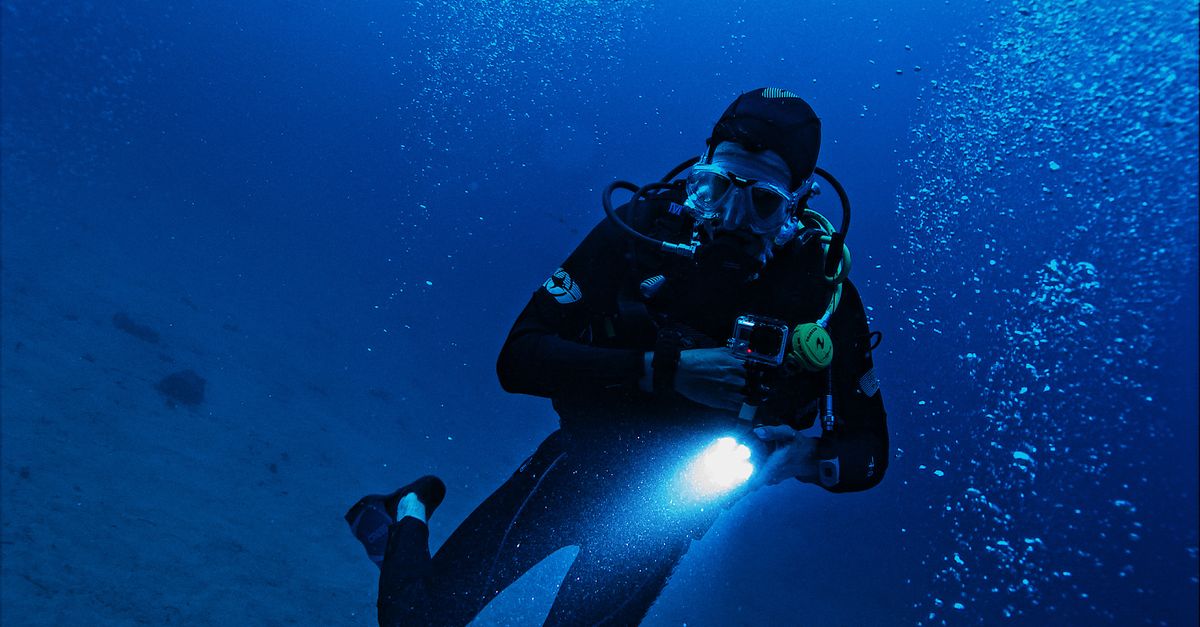
Every dive shop in every resort town sells the same upgrade: nitrox, usually by the tank, sometimes with a small certification course attached. Ask whether it is worth it and you will hear two confident answers from the same counter — “every serious diver uses it” and “it is a marketing tax” — which tells you the question is usually answered by whoever profits from the answer. This article is the boring middle: what enriched air actually changes in the water, what it costs on a real trip, which diver profiles benefit, and which should politely decline. Alongside the planning pieces like planning dive travel around seasons and water temperature, nitrox is one of those decisions that is easy once the math is in front of you and confusing only while it stays vague.
The one-sentence version, which the rest of the article earns: nitrox buys you longer no-decompression time at depth, and that purchase only matters if your diving is deep, repetitive, or both.

What Nitrox Actually Changes Underwater
Air is roughly 21 percent oxygen; nitrox raises that share, most commonly to 32 or 36 percent, and lowers the nitrogen share accordingly. Since it is inert nitrogen loading that limits your no-decompression time, less nitrogen means more allowable bottom time at a given depth — the dive computer simply lets you stay longer before forcing a slower ascent. At eighteen meters the difference is modest; at thirty meters on a second dive it is the difference between a real dive and a glorified swim-down. What nitrox does not do is equally important. It does not let you dive deeper — the oxygen itself becomes a depth limit, and every nitrox mix carries a maximum operating depth you must respect. It does not make you less tired in any proven sense, whatever the dock anecdotes say. And it does not replace any part of normal dive planning; it changes one line of it. The course that qualifies you to use it, like the widely taught PADI Enriched Air Diver program, is mostly about learning those two facts properly: the benefit at recreational depths and the depth limit of the mix.
The Cost Math On A Typical Dive Trip
Do the arithmetic for your actual itinerary before the resort does it for you. Nitrox typically adds a per-tank fee, or an unlimited-nitrox package on liveaboards, plus the one-time certification cost if you are not already qualified. Now count the dives where the benefit is real: on a shallow reef week at twelve to fifteen meters, a recreational diver on air rarely hits no-decompression limits anyway, so the upgrade buys minutes nobody was short of. On a dedicated wreck or drift week with two or three dives a day at twenty-five to thirty meters, the same diver on air watches the clock every afternoon while the nitrox diver finishes the dive — that is where the fee pays for itself in actual underwater time. A simple trip test: if most of your planned dives are shallower than twenty meters, skip it; if several are deeper than twenty-five and back-to-back, take it. The question pairs naturally with the gear decision in rental gear versus bringing your own, because one of the practical checks is whether the rental setup you will actually be handed is nitrox-ready.
Who Benefits Most — And Who Does Not
The profiles split cleanly. Nitrox earns its fee for: divers on liveaboards and dive resorts running three dives a day, where repetition stacks nitrogen across the week; photographers and wreck enthusiasts who dive deep and slow and genuinely use the extra minutes; older divers, for whom conservative profiles matter and many of whom simply feel better ending dives with more margin; and anyone doing repetitive multi-day diving on a short, expensive trip where underwater minutes are the whole product. Nitrox is a poor purchase for: the once-a-year shallow reef diver; students still in training, who should build fundamentals on air first; and anyone who does not intend to keep the mix analysis habit, because the entire safety case of nitrox rests on checking what is actually in the tank. Worked application: two friends book the same four-day liveaboard. One takes the nitrox package, one stays on air. By day three the air diver is surfacing fifteen minutes before the group every dive; the nitrox diver paid roughly the cost of one fun dive for three days of extra bottom time — and both of them now know exactly which profile they are.
Getting Certified Without The Hype
The certification itself is refreshingly unglamorous. The academic portion covers how to read a mix label, analyze a tank, set the computer to the right percentage, and respect the maximum operating depth; there is often no required open-water dive, since the skills are procedural. That makes it one of the cheapest and fastest ratings in recreational diving, completable in an evening in many shops. Two habits separate a nitrox-certified diver from a nitrox-safe one. Analyzing your own tank before every dive, personally, rather than trusting a sticker — the sticker tells you what was in the tank yesterday. And setting the computer yourself from the analyzed number, every dive, without relying on the previous diver’s setting. Beyond that, the certification is a license to do arithmetic underwater, which is also, honestly, the fun of it. If you are working on the fundamentals first, the buoyancy skills that make dives easier will improve your dives more per dollar than any mix — better buoyancy saves air, and saved air buys time without a fee.
One last honest point: plenty of excellent divers never dive enriched air, and nothing in this article is a rank. The certification is a tool for a specific profile, not a badge. Diving well on air, at depths that suit air, is a complete and respectable way to spend a week underwater — and it will still be there if your diving ever changes.
If you take one rule: nitrox is worth it when your trip is deep and repetitive, and it is a donation when your trip is shallow and occasional. Decide from your itinerary, not from the shop counter.