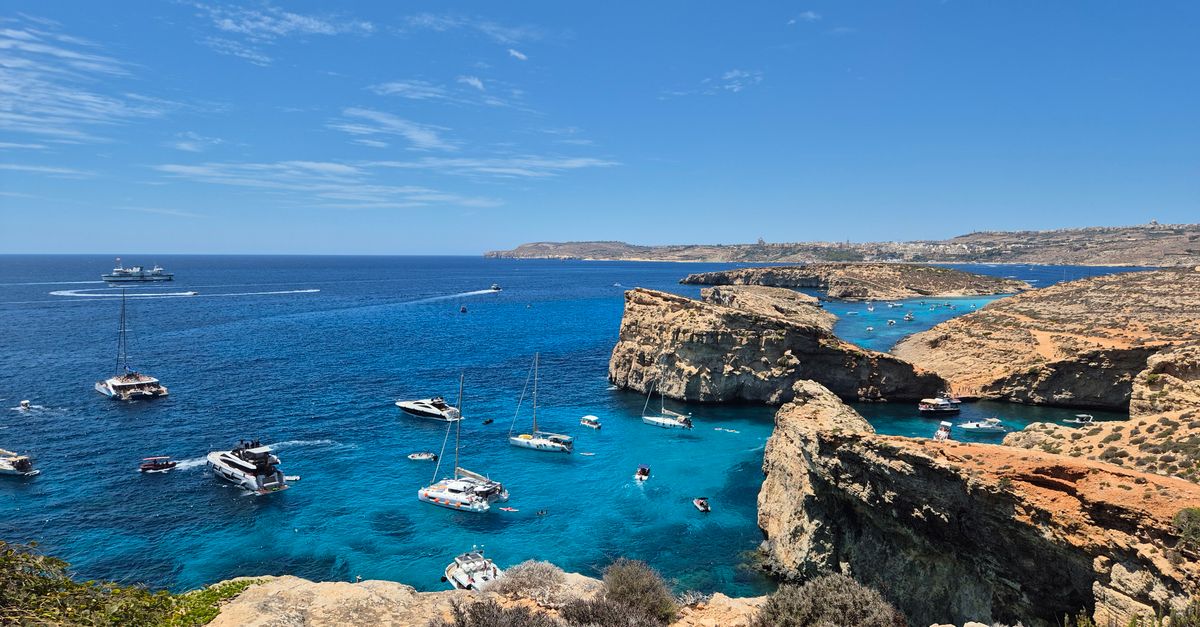
Malta is the rare dive destination where you can land with a carry-on bag, check into a guesthouse above the water, and be descending along a Second World War destroyer before lunch the next day. The archipelago packs limestone caves, a flooded tanker, tunnel dives, and some of the easiest shore access in the Mediterranean into an area smaller than most capital cities, and it does it in English, with the euro, and with dive shops stacked along the waterfront.
If you want the short version: base yourself in Gozo if shore diving is the point of the trip, in Mellieħa or Buġibba if you want the north-coast wrecks on your doorstep, and in Valletta or Sliema if you want the harbour history and restaurants after one dive a day. Come between May and October for warm water and long boat days, or in winter with a drysuit for empty sites and some of the best visibility of the year. The rest of this guide is the long version — the sites, the seasons, the wrecks, the safety boundaries, and three ready-made ways to spend a week.
This is the complete planning reference for diving Malta: what is actually under the water at each famous name, how the three islands differ, when to book, what it costs in effort, and how to build a seven-day trip that does not waste a single dive on a bad decision.
Why Malta Earns a Full Week of Your Dive Calendar
Most destinations make you choose. Shore diving or boat diving. Warm water or wrecks. A trip your partner enjoys or a trip you enjoy. Malta refuses the trade-offs. The islands sit at the crossroads of the Mediterranean, 80 kilometres south of Sicily, and their limestone coastline has been carved into caves, arches, tunnels, and drop-offs that start a fin kick from a parking lot. Operators here speak of “the house reef” the way Caribbean resorts do, except the house reef is a 110-metre tanker or a chimney that drops past recreational limits.
Three things make Malta genuinely different from other European diving. First, the density: well over a hundred named dive sites sit within a forty-minute drive of each other, so a single week can include a cave swim-through, a wreck at 30 metres, and a lazy shallow reef afternoon without changing hotels. Second, the access: a huge share of the best diving is from shore, which means no boat schedule, no minimum numbers, and the freedom to dive at dawn or dusk when the water is yours alone. Third, the infrastructure: Malta has been a diver’s destination since the 1960s, and the industry around it — compressors on piers, gear rental in village squares, guides who learned the sites from their parents — is mature in a way that makes first-time visitors comfortable and repeat visitors lazy, in the best way.
The trade-off is honest: this is not a coral-reef destination. The reward is architecture — rock formations, swim-throughs, and deliberately scuttled wrecks — plus visibility that regularly clears 25 metres and occasionally touches 40. If your idea of a great dive is structure, history, and light playing through a tunnel exit, Malta will spoil you for anywhere else in Europe.
The Three Islands and Where to Base Yourself
Malta is three inhabited islands, and choosing your base is the single most consequential decision of the trip. The main island of Malta holds the capital Valletta, the airport, most of the population, and the north-coast dive sites around Cirkewwa. Gozo, a 25-minute ferry ride northwest, is the quieter sister: greener, slower, and home to the archipelago’s most famous shore dives at Dwejra. Comino, between them, is a tiny car-free island with a handful of excellent shallow sites and the Santa Maria Caves.
Base in Gozo if shore diving is the reason you came. Xlendi, Marsalforn, and Nadur all sit within fifteen minutes of the Dwejra sites, the Inland Sea tunnel, and a string of reefs and caves along the southwest coast. Gozo works for every level: beginners get sheltered bays, advanced divers get depth and overhead environments within a comfortable drive. The rhythm of the island — morning dive, long lunch, afternoon dive, sunset at the salt pans — is the one most divers remember.
Base in Mellieħa or Buġibba (north Malta) if wrecks and convenience are the priority. Cirkewwa, the country’s most popular shore site with its arch, reef, and two scuttled patrol vessels, is minutes away, and the ferry to Gozo is close enough for day trips. This coast also has the densest concentration of dive centres and the easiest logistics for a shorter stay. The Malta Tourism Authority’s official site keeps current listings for accommodation across both islands if you are comparing bases.
Base in Valletta or Sliema if the trip mixes diving with everything else — the harbour fortifications, the food, the nightlife, and day boats. You sacrifice the dawn-dive flexibility but gain a city break wrapped around two dives a day, including easy access to the HMS Maori wreck right in Grand Harbour. Comino’s caves, meanwhile, are reached by short boat trips from either island base and make a perfect half-day add-on between bigger dives.
Signature Shore Dives You Can Walk Straight Into
Malta’s reputation rests on its shore sites, and four of them belong on almost every itinerary.
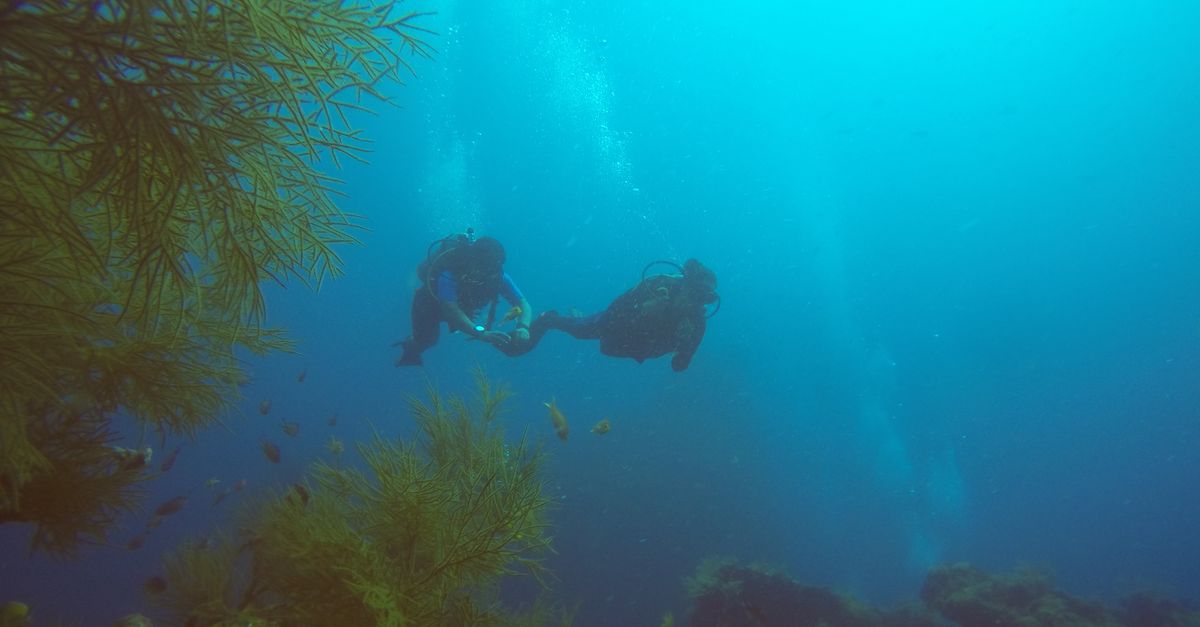
The Blue Hole, Dwejra (Gozo). A natural limestone chimney that begins in about 7 metres of protected water and drops past recreational limits, the Blue Hole is Malta’s most photographed dive for good reason. The descent follows a vertical shaft lined with sponges and cardinalfish, exits through a large arch toward open sea, and finishes along a boulder slope where groupers patrol. The classic route stays above 30 metres; treat anything deeper as a distinct, properly trained plan rather than a drift downward. Entry is a short walk over flat limestone — easy, but wear boots and time it away from the mid-morning crowds in high summer.
The Inland Sea and tunnel, Dwejra (Gozo). A shallow, landlocked lagoon connects to the open Mediterranean through a narrow tunnel of roughly 80 metres. You kit up in the lagoon, drop to about 6 metres, and fin through the tunnel as the walls close in and the light ahead swells from blue to blinding. The exit opens onto a dramatic wall and reef plateau with octopus, morays, and — if you are lucky — a passing amberjack. It is comfortably the most memorable 200 metres of swimming in the country, and shallow enough that air lasts a long time.
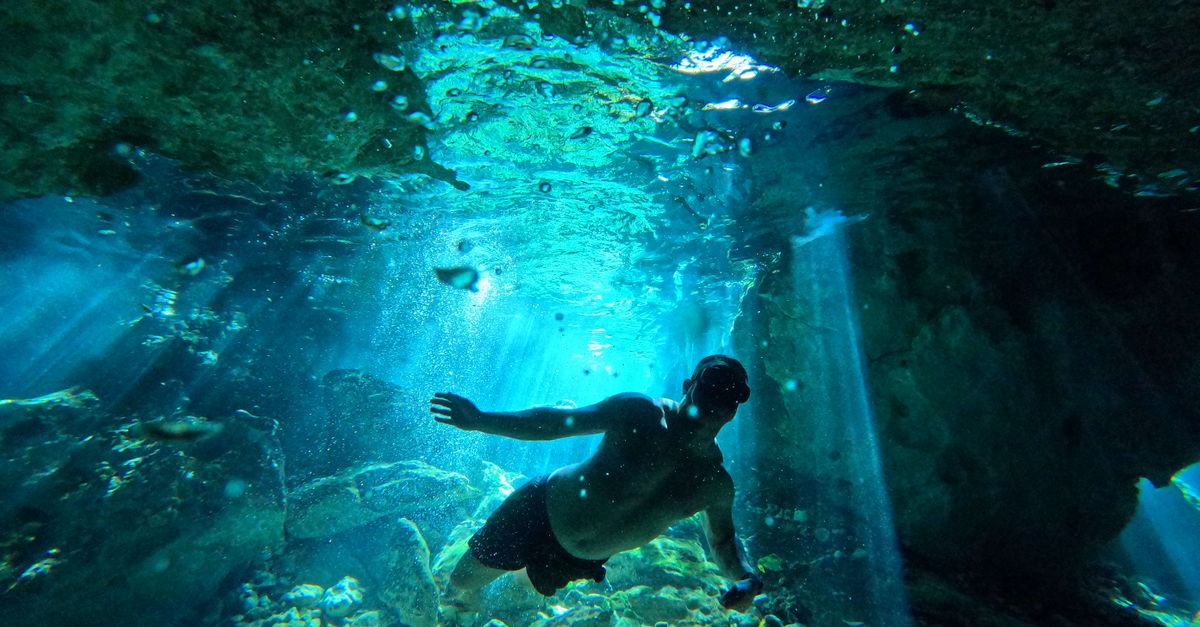
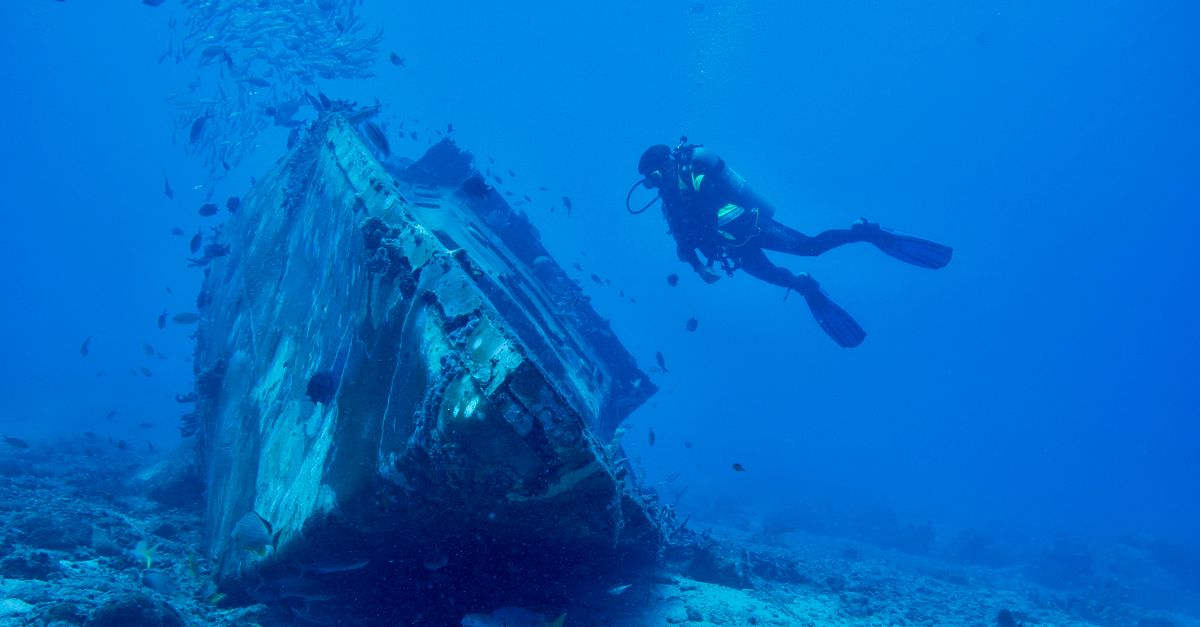
Cirkewwa (north Malta). Malta’s most-dived site is an aquatic theme park: a natural arch at around 15 metres, gardens of posidonia and boulders, and two wrecks scuttled as artificial reefs. The Rozi, a tug sitting in the mid-30s, and the P29, a former patrol boat scuttled in 2007, both start shallow enough for the top of the superstructure to greet Open Water-level divers while their decks stretch down toward 30 metres and beyond. One entry, a full day.
Anchor Bay and Għar Lapsi (south Malta). Quieter than the headline sites, these sheltered coves deliver easy entries, turtle sightings, and some of the best fish life on the islands. Għar Lapsi in particular, with its cave-fringed inlet and plateau at 10 to 15 metres, is where local divers go when they want a relaxed second dive of the day.
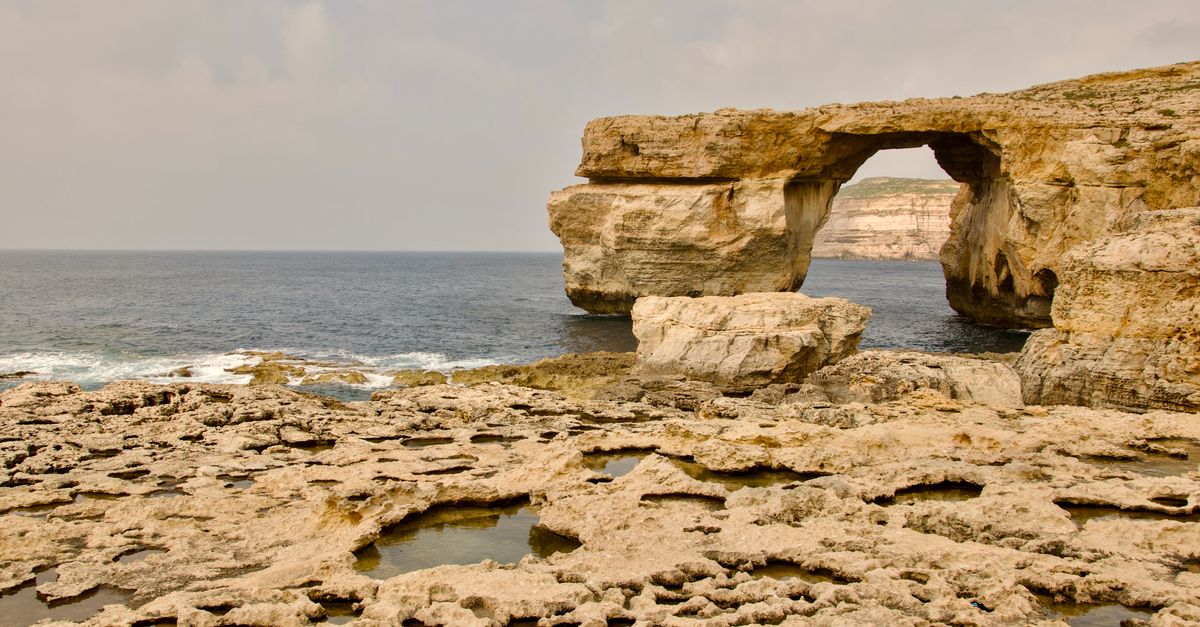
One note for the checklist: the Azure Window, the famous limestone arch that framed every Malta postcard, collapsed into the sea during a storm in March 2017. What remains is a fresh rubble field and broken blocks off Dwejra — a genuinely interesting, ghostly dive that many operators now include as part of a combined Blue Hole day. Do not arrive expecting the arch; arrive expecting its aftermath.
The Wreck Chapter: Um El Faroud and Friends
Malta’s wreck diving splits into two families: the deliberately scuttled artificial reefs that now read as natural reefs with convenient handrails, and the genuine wartime casualties that make the islands an open-air naval museum.
Um El Faroud is the centrepiece. This 110-metre Libyan tanker was cleaned and scuttled in 1998 off Wied iż-Żurrieq on the south coast after storm damage ended her working life, and she now lies upright on the sand between about 15 and 36 metres. The dive is pure architecture: swim the length of the deck, look up through crane structures, peer into holds that light penetrates from above, and circle the propeller at the deep end. The top of the wreck is reachable shortly after Open Water depth limits, while the full tour is a comfortable Advanced-level profile. Boats run from the tiny harbour at Wied iż-Żurrieq, and the same village is your surface interval — a cliff-side café above a blue cove.
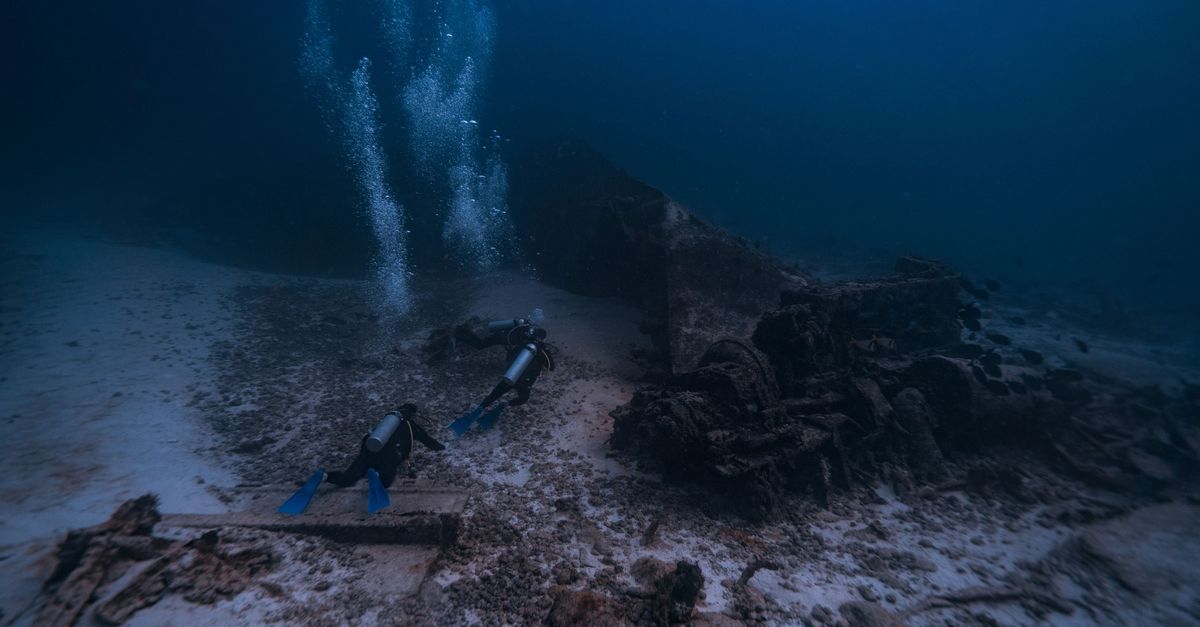
The Cirkewwa pair — the Rozi and the P29 — were covered above, but they deserve a second mention here because they are Malta’s best wreck-for-effort ratio: two boats, one shore entry, no boat fee. The P29 in particular, sitting upright with its mast and superstructure intact, photographs beautifully in the morning light that hits the northwest coast.
HMS Maori is the history dive. This British destroyer was bombed and sunk in Grand Harbour during 1942 and now lies in roughly 14 to 16 metres of water in Valletta’s outer harbour, a short boat ride from the city. It is shallow, atmospheric, and half buried in sand — less a penetration dive than a memorial you float over, reading a warship’s bones through the gloom. Pair it with a harbour cruise past the fortifications for the full effect.
For technical divers, Malta’s deeper list runs long — the wrecks of the HMS Southwold, the MV Odile, and several aircraft among them — but that territory belongs to specialist guides and dedicated training, not to a first-trip guide. If deep wreck diving is your ambition, tell your operator before you arrive so the right guide and gases are arranged. Our guide to choosing a dive operator for your first trip covers exactly the questions that sort serious wreck programmes from marketing copy.
When to Go: Malta by Season
Malta is a year-round destination, but the experience changes dramatically by month. Water temperature swings from roughly 15 degrees in late winter to about 27 degrees in August, air temperature from mild to genuinely hot, and the islands’ mood from empty to packed. The table below is the honest seasonal picture:
| Season | Water temperature (approx.) | What you get | Who it suits |
|---|---|---|---|
| May to June | 19–24 °C | Warm enough for a long wetsuit or 5 mm, calm seas, sites uncrowded, everything open | Best all-round window; ideal first visit |
| July to August | 25–27 °C | Peak heat, peak crowds, boat trips at capacity, warmest night diving | Divers combining with a beach holiday; book early |
| September to October | 23–26 °C falling to 21 °C | Warm water, thinning crowds, the local favourite | Experienced divers who hate queues |
| November to April | 15–18 °C | Empty sites, the year’s best visibility, rougher seas on exposed coasts, some boat ops closed | Drysuit divers and photographers after silence |
Two practical notes follow from the table. First, wind matters more than month: the islands’ exposed west coast can go from glass to undivable in a day, and good operators move you to the sheltered east or south rather than cancelling. Build one flexible day into the week and let the shop sequence your sites around the forecast. Second, winter diving here is a genuine secret — a 7 mm semidry or drysuit, water like gin, and the Blue Hole to yourself — but confirm that your chosen centre runs winter schedules before booking flights. Seasonal planning in general rewards a little systems thinking, and our guide to planning dive travel around seasons, visibility, and temperature walks through the same logic for any destination.
The Malta Week Planner
Here are three ways to actually spend seven days, built around the bases and sites above. Treat them as starting points and let your operator shuffle days for weather — every one of them assumes a rest or buffer half-day, because a Malta week without flexibility is a week that loses its best dive to a wind call.
| Day | The Classic First-Timer | The Wreck Enthusiast | The Slow Gozo Week |
|---|---|---|---|
| 1 | Arrive, check in (Buġibba), kit check dive on the house reef | Arrive, check in (Mellieħa), orientation dive at Cirkewwa | Ferry to Gozo, check in (Xlendi), sunset at the salt pans |
| 2 | Cirkewwa: arch, reef, and the P29 top section | Cirkewwa double: Rozi and P29 in one long dive day | Għar Lapsi plateau and caves, easy two-dive day |
| 3 | Boat day: Um El Faroud, two dives at Wied iż-Żurrieq | Um El Faroud morning double, afternoon free | Blue Hole and Azure Window rubble field |
| 4 | HMS Maori and Grand Harbour by boat, Valletta evening | HMS Maori plus a harbour second dive | Inland Sea tunnel, repeat it at a different hour |
| 5 | Gozo day trip: Blue Hole and Inland Sea | Deep wreck day with a specialist guide (pre-arranged) | Comino boat day: Santa Maria Caves and the lagoon |
| 6 | Anchor Bay or Għar Lapsi, second dive where the wind allows | Gozo wreck-and-reef combination day | North Gozo reefs or a re-dive of the week’s favourite |
| 7 | Buffer morning dive, pack, fly home | Buffer morning dive, log-book evening | Slow breakfast, ferry, fly home |
The pattern underneath all three: front-load the marquee dives early in the week while you are fresh and the weather has the most days left to retry them, and keep the final morning light so a delayed flight home never costs you the trip’s best dive.
Practicalities: Language, Money, and Getting Around
Malta is frictionless by the standards of small-island diving. English is an official language alongside Maltese — every briefing, waiver, taxi conversation, and menu is in English. The currency is the euro. The airport is 20 minutes from the main island’s dive coasts, and the Gozo ferry takes 25 minutes and runs late into the evening, so even a Gozo-based trip works with late arrivals. Cars drive on the left, rental cars are cheap by European standards, and every notable shore site has a parking area within a short walk of the entry.
Dive centre pricing sits comfortably below the major tropical destinations and roughly in line with the western Mediterranean: expect standard per-dive or package rates, inexpensive shore guiding, and boat supplements for the wreck sites that need them. Equipment rental is widely available and generally well maintained, though anyone picky about mask fit and computer familiarity should follow the bring-rent-leave logic from our guide to traveling with dive gear — and pack it all with the carry-on dive gear packing checklist so the irreplaceables never leave your side.
Connectivity and paperwork are equally simple: EU citizens need only an ID card; visitors from the UK, US, Canada, and Australia enter visa-free for tourist stays. Dive insurance is expected by most operators, and some ask to see certification cards before handing over tanks — photographs of both on your phone have solved this at a hundred checkout counters.
Diving Malta With a Non-Diving Partner
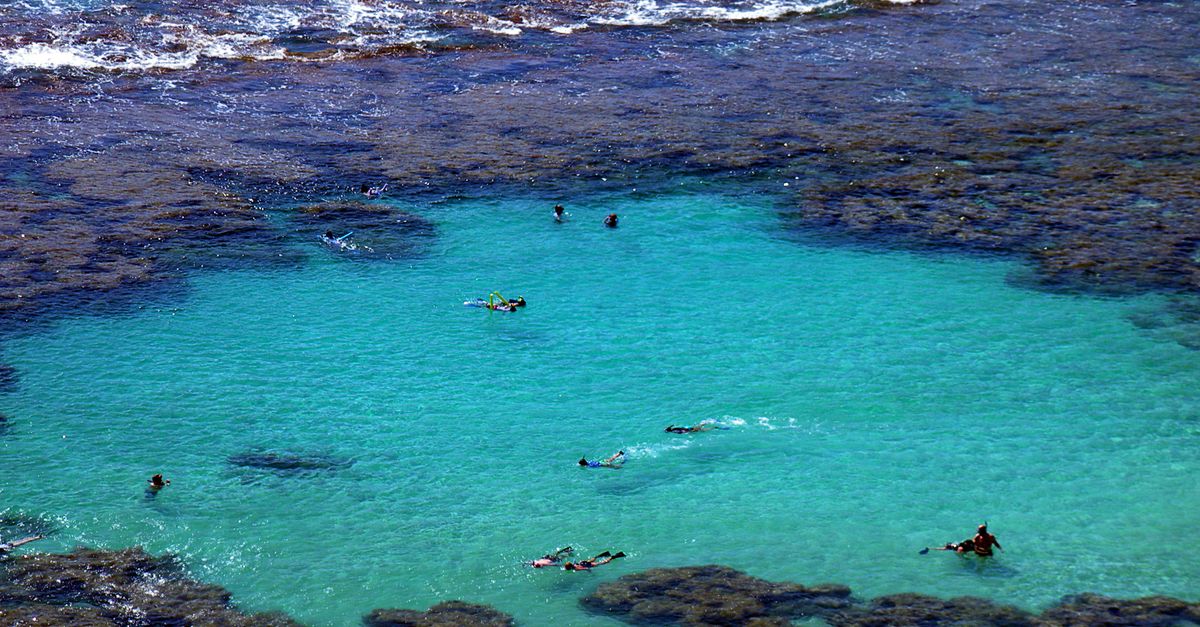
Malta may be the best destination in Europe for the mixed couple. While you are under the Blue Hole, your partner can be on the clifftop walking path above Dwejra, swimming at the Inland Sea lagoon (it is a snorkeller’s paradise), or riding the coast road between village festivals. Comino’s Blue Lagoon is one of the Mediterranean’s most famous beach days and sits minutes from the Santa Maria Caves. Valletta, Mdina, and the Three Cities fill any non-diving day without a car, and Gozo’s farm-to-table restaurants and megalithic temples — older than the pyramids — reward slow exploration. The ferry hop between islands is an outing in itself. If the trip is a negotiation, Malta is your strongest argument; the fuller playbook is in our guide to planning a dive trip with a non-diving partner.
Safety Boundaries That Keep the Week Fun
Malta is easy diving, not consequence-free diving, and four boundaries keep it that way.
Depth discipline on the famous sites. The Blue Hole chimney, the Cirkewwa wrecks, and Um El Faroud all tempt you deeper than your certification with architecture that looks close enough to touch. Decide your maximum depth on the surface, set the computer to nag you about it, and remember the deepest 5 metres buys you almost nothing but nitrogen. Advanced Open Water or a deep specialty genuinely improves this trip.
Overhead environments are a training question, not a bravery question. The Inland Sea tunnel is comfortably within recreational training for a calm, guided fin-through. The island’s true caves — and there are many — are not. Penetrating any overhead beyond the light zone belongs to cavern or cave training; Malta has excellent technical instructors, and a cavern course here is a superb use of two days, but walk into the tunnel with a guide, not with confidence.
Boat traffic and harbours. Sites like the Maori sit inside working harbours with real traffic, and even shore sites get summer traffic from above. Carry a surface marker buoy on every dive, especially the deeper wreck profiles where your safety stop happens in open water.
The rocky entries. Almost every Malta entry is limestone: grippy when dry, slick when wet, sharp on bare feet. Boots are standard kit here, a reef hook is useful on some walls, and the ten seconds of care on entry and exit prevent the only injury this destination regularly delivers. These habits are the same ones every destination asks of you; if any feel new, the structured version lives in beginner safety fundamentals from agencies such as PADI, whose local Malta centres run everything from refresher dives to full technical pathways.
Your Pre-Flight Checklist
Before you book, run this list. Certification card and logbook photographed on your phone. Dive insurance active and covering the depths you actually plan. Operator contacted with your certification level, experience, and the sites you care about — a good shop will rearrange the whole week around wind and your interests. Accommodation matched to a base from this guide, not to a pretty photo. One flexible day in the itinerary. Booties and a surface marker buoy in the bag. And the ferry timetable screenshot saved for the Gozo crossing.
Do those eight things and Malta will do the rest. The water is clear, the wrecks are waiting, the coffee at Wied iż-Żurrieq is better than it has any right to be, and somewhere around day four you will start pricing winter flights back.